
What food retailers should know before selecting lighting systems
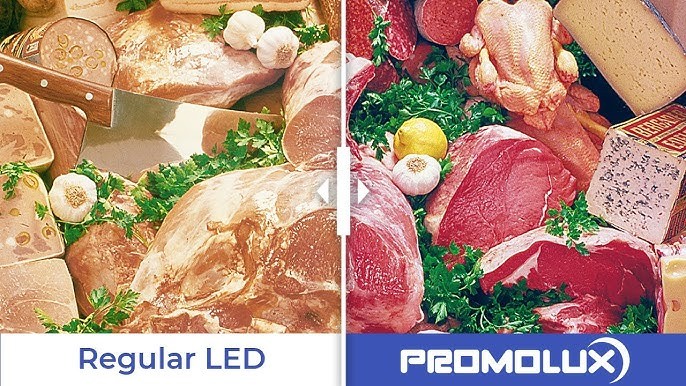
Lighting plays a critical role in food retail, influencing product appeal, freshness, and sales. While conventional LEDs have improved energy efficiency compared to fluorescent or halogen lights, not all LEDs are created equal. Food-focused LEDs, such as Promolux, are specifically designed for supermarkets, butcher shops, seafood counters, and bakery displays. Understanding the differences between Promolux LEDs and standard LEDs helps retailers make informed decisions when selecting lighting systems.
Why Lighting Choice Matters in Food Retail
- Product Appearance
- Accurate color rendering is essential for fresh meat, seafood, dairy, produce, and bakery items
- Poor lighting can distort colors, making products look less fresh or appealing
- Shelf Life and Quality
- Excess heat from traditional LEDs can accelerate spoilage, drying, or discoloration
- Proper lighting preserves texture, moisture, and natural color
- Energy Efficiency
- High-efficiency LEDs reduce electricity consumption and operational costs
- Low-heat, long-lasting fixtures lower maintenance requirements
- Customer Perception
- Well-lit displays enhance shopping experience and encourage purchases
- Lighting that highlights freshness fosters trust and repeat business
Key Differences Between Promolux LEDs and Conventional LEDs
- CPI
- Promolux LEDs: High CRI (95+), accurately displays natural colors of food
- Conventional LEDs: Lower CPI, often 80–85, which can distort reds, greens, and yellows
- Impact: High-CPI Promolux lighting ensures meat, seafood, and produce appear fresh and vibrant
- Heat Output
- Promolux LEDs: Low heat emission, protecting temperature-sensitive products
- Conventional LEDs: Some generate moderate heat, potentially affecting case temperatures
- Impact: Reduces spoilage risk in meat, dairy, and bakery refrigerated displays
- UV and Blue Light Emission
- Promolux LEDs: UV-free and low blue-light spectrum to prevent color fading and nutrient loss
- Conventional LEDs: Often emit higher UV or blue light, accelerating oxidation and discoloration
- Impact: Sensitive foods like berries, leafy greens, or marinated meats maintain freshness longer under Promolux LEDs
- Energy Efficiency and Lifespan
- Promolux LEDs: Optimized for low energy use, long lifespan (50,000+ hours), minimal maintenance
- Conventional LEDs: Good efficiency, but may degrade faster or require more frequent replacement
- Impact: Reduced operational costs and less downtime for food-focused displays
- Specialized Food Applications
- Promolux LEDs: Tailored for meats, seafood, produce, dairy, and bakery products
- Conventional LEDs: General-purpose lighting, not optimized for food color accuracy or freshness preservation
- Impact: Promolux LEDs enhance customer appeal and protect product quality
Benefits of Choosing Promolux LEDs
- Enhanced Product Appeal
- Meat displays show true marbling and freshness
- Bakery items maintain natural crust and crumb appearance
- Produce retains vibrant colors
- Reduced Product Waste
- Low-heat and UV-free lighting slow spoilage, drying, and discoloration
- Extends shelf life, reducing unsold inventory
- Energy and Maintenance Savings
- Longer-lasting LEDs reduce replacement costs
- Lower electricity usage decreases operational expenses
- Customer Confidence
- Accurate and consistent product presentation builds trust
- Encourages repeat shopping and enhances brand reputation
Practical Considerations for Retailers
- Case Type
- Refrigerated Cases: Low-heat, high-CPI Promolux LEDs preserve freshness without affecting temperature
- Ambient Displays: Promolux LEDs enhance color rendering without introducing glare
- Product Sensitivity
- Meat and Seafood: Sensitive to heat and UV; Promolux maintains natural color and texture
- Produce and Dairy: Reduces oxidation and moisture loss
- Installation and Adjustment
- Promolux LEDs are compatible with most standard fixture mounts
- Can be angled or layered for multi-shelf displays to ensure even illumination
- Energy Management
Calculate energy savings versus conventional LEDs by considering heat load, case temperature control, and operational hours
Case Example
A supermarket replacing conventional LEDs in refrigerated meat cases with Promolux LEDs observed:
- Improved color accuracy of steaks, ground beef, and poultry
- Lower energy consumption due to reduced refrigeration load
- Extended shelf life for displayed products
- Higher customer satisfaction and increased sales
Similar benefits were observed in bakery and produce sections, where color and freshness were consistently improved under Promolux lighting.
Conclusion
While conventional LEDs provide general energy efficiency, Promolux LEDs are specifically engineered for food retail. High CPI, low heat, UV-free spectrum, and optimized energy usage make them ideal for meats, seafood, dairy, produce, and bakery products. By selecting Promolux LEDs, food retailers can improve product appearance, extend freshness, reduce waste, save energy, and enhance customer perception. Understanding these differences helps retailers make informed decisions to optimize both product quality and store operations.
Call to Action
For LED solutions that For food-focused LED lighting solutions designed for superior product appearance and energy efficiency visit: www.refrigerationlighting.com